 THE AFRICAN COURIER. Reporting Africa and its Diaspora! The African Courier is an international magazine published in Germany to report on Africa and the Diaspora African experience. The first issue of the bimonthly magazine appeared on the newsstands on 15 February 1998. The African Courier is a communication forum for European-African political, economic and cultural exchanges, and a voice for Africa in Europe.
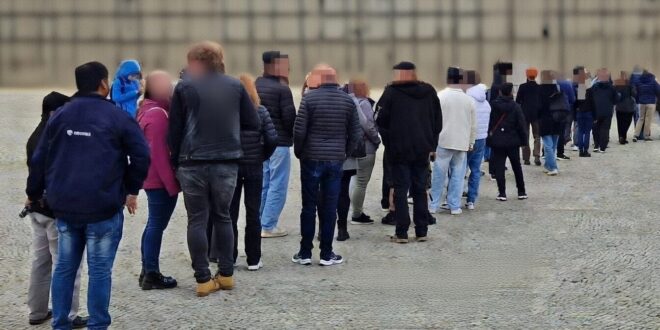
From 1 February 2026, Germany will apply a new regulation that fundamentally changes how so-called “safe countries of origin” are designated in asylum procedures. The federal government says the move will speed up decisions, ease pressure on authorities and courts, and send a clear signal that asylum applications from certain countries have little chance of success. Critics, however, warn that the reform weakens parliamentary oversight and risks undermining fundamental rights.

What the New Regulation Means
Under the new law, the German government can classify countries as safe countries of origin for international protection by statutory order, rather than through a full legislative process requiring approval by parliament and the Bundesrat (the chamber of federal states).
As of February 2026, the cabinet-approved regulation confirms Albania, Bosnia and Herzegovina, Georgia, Ghana, Kosovo, Moldova, Montenegro, North Macedonia, Senegal and Serbia as safe countries of origin for international protection under Section 29b of the Asylum Act. These countries were already listed as safe countries in another part of the law, but the new mechanism makes it easier and faster to apply the classification specifically to refugee and subsidiary protection procedures.
In practice, this means that asylum applications from these countries will generally be processed more quickly. Authorities start from the presumption that there is no systematic persecution, torture, inhuman treatment or armed conflict in these states. As a result:
- Deadlines for appeals against rejected asylum claims are shorter.
- Appeals no longer automatically suspend deportation orders.
- Applicants face stricter residence obligations and work bans while their cases are pending.
However, the government stresses that individual assessment remains mandatory. Applicants still have the right to explain, during their asylum interview, why they personally face persecution or serious harm despite their country being classified as “safe”. Protection, officials insist, is not legally excluded.
Why the Government Supports the Change
The federal government argues that the reform is necessary to make the asylum system more efficient and credible. According to official figures, asylum applications from many of the listed countries have very low recognition rates, yet still consume considerable administrative and judicial resources.
By using a provision already allowed under EU Directive 2013/32, the government believes it can:
- Accelerate asylum procedures,
- Reduce backlogs at the Federal Office for Migration and Refugees (BAMF),
- Relieve administrative courts,
- And discourage applications with little prospect of success.
From the government’s perspective, the reform also improves clarity: people considering applying for asylum should understand early on that claims from designated safe countries are unlikely to succeed unless there are exceptional personal circumstances.
Importantly, the regulation does not change Germany’s constitutional right to asylum under Article 16a of the Basic Law, which continues to apply in very limited cases of political persecution.
Why Critics Are Alarmed
The strongest opposition comes from the Green Party (Die Grünen), which has taken the issue to Germany’s Federal Constitutional Court. The Greens argue that allowing the government to decide such matters by regulation sidelines parliament and violates the constitution.
According to Irene Mihalic, parliamentary secretary of the Green parliamentary group, the reform represents a “constitutionally unlawful self-diminution of the Bundestag”. In their view, decisions that affect individual protection rights cannot be treated as routine administrative acts.
The Greens point to the Basic Law, which states that the designation of safe countries of origin should be made by law and with the consent of the Bundesrat. They argue that this requirement exists precisely because such classifications have far-reaching consequences for asylum seekers’ rights and legal remedies.
Another Green MP, Filiz Polat, has warned that the measure interferes with core principles of the rule of law, noting that the classification of countries as “safe” is not merely technical, but directly affects people’s chances of receiving protection.
Implications for African Asylum Seekers
For African communities in Germany, the inclusion of Ghana and Senegal is particularly significant. While both countries are widely regarded as politically stable compared to many others, critics argue that the “safe country” label can obscure individual risks, including persecution based on sexual orientation, gender, political activism or local conflicts.
Migrant advocacy groups fear that faster procedures and tighter appeal rules could make it harder for vulnerable individuals to fully present their cases, especially those with limited legal support or language skills.
A Debate Far from Over
With the new regulation entering into force in February and a constitutional challenge pending, the issue is far from settled. While the government celebrates the reform as a step toward a more efficient asylum system, critics see it as a troubling shift of power away from parliament and toward the executive.
For now, asylum seekers from designated countries will face a tougher and faster process—while Germany’s highest court prepares to decide whether the government has gone too far.
Sola Jolaoso