 THE AFRICAN COURIER. Reporting Africa and its Diaspora! The African Courier is an international magazine published in Germany to report on Africa and the Diaspora African experience. The first issue of the bimonthly magazine appeared on the newsstands on 15 February 1998. The African Courier is a communication forum for European-African political, economic and cultural exchanges, and a voice for Africa in Europe.
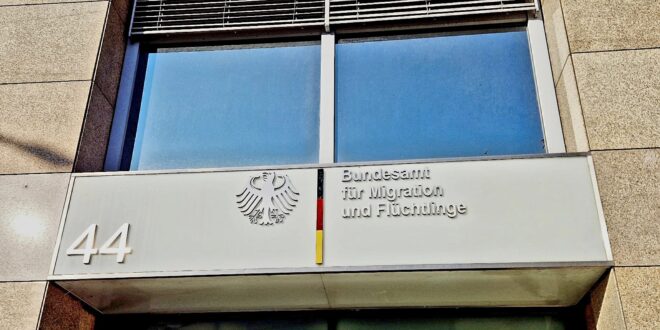
Germany saw a steep fall in first-time asylum applications in the opening quarter of 2026, even as a separate category of claims — follow-up applications from Afghan nationals — jumped to extraordinary levels, according to new data from the Federal Office for Migration and Refugees (BAMF).
Between January and March, a total of 21,617 refugees submitted an initial asylum application in Germany, compared to 35,657 during the same period in 2025 — a decline of roughly 39 per cent. Federal Interior Minister Alexander Dobrindt interpreted the figures as confirmation that “the asylum policy shift is taking effect,” pointing to tighter border enforcement and stricter admissions procedures introduced by the Merz government since taking office in mid-2025. Illegal border crossings also fell sharply, with the Federal Police recording 12,147 unauthorised entries at all German land, air and sea borders in the first quarter — the lowest figure since the coronavirus year of 2021.
When first-time and subsequent applications are counted together, BAMF registered a total of 32,833 asylum claims in the first three months of the year. Afghans accounted for the largest single group, at 12,363 applicants, followed at considerable distance by Syrians and Turkish nationals. A further 3,722 first-time applications concerned children born on German soil.
The headline numbers, however, tell only part of the story. While new applications fell, BAMF flagged a dramatic rise in follow-up claims from Afghan citizens — applications filed by people already in the asylum system who seek a revised decision based on changed circumstances. Many of these cases stem from a landmark ruling by the European Court of Justice in late 2024, which declared that women in Afghanistan are generally subject to political persecution under Taliban rule, making them eligible for full refugee status.
Afghan nationals who had previously been granted the lesser status of subsidiary protection began submitting follow-up applications to have their cases reassessed under the new standard.
The legal backdrop is grim: in 2025 the Taliban deepened their repression of women and girls, tightening restrictions on education, movement, employment and freedom of expression. BAMF itself noted that since the Taliban takeover, conditions for women and girls in Afghanistan have continued to deteriorate — a formulation that understates what human rights organisations describe as a systematic erasure of women from public life.
The overall protection rate for all asylum applicants currently stands at 38 per cent, with an average processing time of 11.3 months — a figure that has crept upward as the backlog of pending cases grows. BAMF made decisions on over 73,000 first- and follow-up applications in the first quarter, a reduction of nearly 13 per cent compared to the same period last year.
For refugee advocates, the figures capture a tension at the heart of Germany’s current asylum policy: a political drive to reduce arrivals on one hand, and on the other, a growing body of Afghan women asserting — and increasingly winning — the full legal protection they were long denied.
Vivian Asamoah