 THE AFRICAN COURIER. Reporting Africa and its Diaspora! The African Courier is an international magazine published in Germany to report on Africa and the Diaspora African experience. The first issue of the bimonthly magazine appeared on the newsstands on 15 February 1998. The African Courier is a communication forum for European-African political, economic and cultural exchanges, and a voice for Africa in Europe.

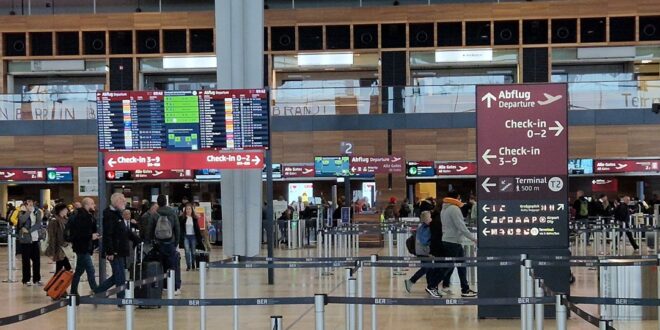
Travelling to Europe will become more digital and more regulated in 2026, as the European Union and the United Kingdom introduce new entry systems aimed at improving border security and managing migration. These changes will be particularly relevant for travellers from Africa and other non-EU regions who visit Europe for tourism, business, education or family reasons.
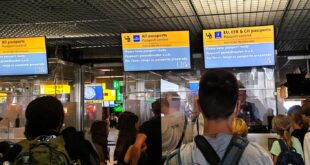
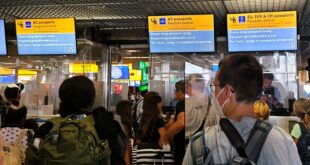
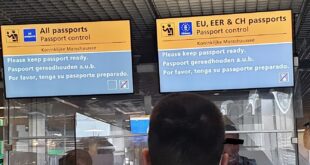
One of the most significant changes is the full rollout of the EU’s new Entry/Exit System (EES). While parts of the system have already been introduced since October 2025, the EES will be fully in force across all Schengen border points by 10 April 2026. From that date, passport stamps will largely disappear for non-EU travellers entering the Schengen Area.
Instead, border authorities will register travellers electronically, recording name, travel document details, place and date of entry or exit, and length of stay. First-time users will also provide biometric data, including fingerprints and a facial image. The EES is designed to automatically monitor compliance with the rule that allows short-term visitors to stay for a maximum of 90 days within any 180-day period.
The new system applies to all Schengen states — with the exception of Ireland and Cyprus — as well as to Iceland, Norway, Switzerland and Liechtenstein.
Closely linked to the EES is the long-planned European Travel Information and Authorisation System (ETIAS). ETIAS will apply to travellers from countries whose citizens do not currently need a visa to enter the Schengen Area, including the United States, Canada, Australia and many countries in Africa, Asia and Latin America.
ETIAS is scheduled to become operational in the second half of 2026. Once active, affected travellers will need to apply online before travelling and pay a small fee. Authorisation will be valid for travel for up to three years and allow multiple short stays. While a transition phase is expected, travellers are advised to prepare for ETIAS as a new routine requirement, similar to the US ESTA system.
The United Kingdom is also introducing a comparable system: the UK Electronic Travel Authorisation (ETA). From February 2026, visitors from visa-free countries will need an ETA before travelling to the UK. The ETA will be obtained online, involve a fee, and be valid for multiple trips over a set period. It will apply to tourism, short business trips and family visits.
While entry procedures are being digitized, another EU country is removing a major hurdle for tourists: Bulgaria will adopt the euro from 1 January 2026. The previous currency, the lev, will be replaced by the common European currency, with the exchange rate fixed at 1 euro = 1.95583 leva.
For travellers, these changes mean more preparation before departure. Applications must be completed in advance, and travellers should expect updated procedures at borders, especially during the early months of implementation.
Vivian Asamoah