 THE AFRICAN COURIER. Reporting Africa and its Diaspora! The African Courier is an international magazine published in Germany to report on Africa and the Diaspora African experience. The first issue of the bimonthly magazine appeared on the newsstands on 15 February 1998. The African Courier is a communication forum for European-African political, economic and cultural exchanges, and a voice for Africa in Europe.

The landmark Trans-African Tourism and Unity Campaign, led by Pan-African advocate and former Ghanaian lawmaker Ras Mubarak, concluded its multi-month continental tour on 22 January 2026 after traversing 31 African countries and covering more than 40,000 kilometres. The campaign, which began in Accra on 18 August 2025, was to promote visa-free travel across Africa by 2030, strengthen tourism, deepen cultural unity and support economic cooperation throughout the continent.
The Vision and Purpose
At its core, the Trans-African Tourism and Unity Campaign aimed to advance the vision of a visa-free Africa — an idea aligned with the African Union’s Agenda 2063, which envisages free movement of people, goods and services as a foundation for continental unity, economic integration and sustainable development. Campaign leaders argued that visa barriers fragment African identity and hold back tourism growth, job creation and interregional cooperation.

Ras Mubarak emphasised that visa-free travel could unlock Africa’s tourism potential, integrate markets more efficiently and expand opportunities for youth employment — particularly in sectors related to hospitality, culture and trade. This initiative also reflects a broader narrative of youthful empowerment and continental self-determination.
Countries Visited and Activities Along the Journey
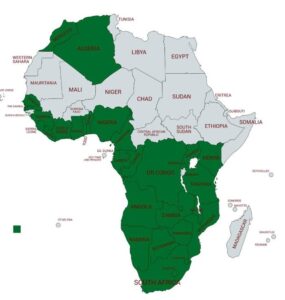
The campaign’s itinerary took the team across a wide swath of Africa, including stops in Togo, Benin, Nigeria, Cameroon, Equatorial Guinea, Gabon, Republic of Congo, Democratic Republic of Congo, Angola, Namibia, Botswana, South Africa, Eswatini, Mozambique, Zimbabwe, Zambia, Malawi, Tanzania, Kenya, Uganda, Ethiopia and the Central African Republic before returning to Ghana. Throughout these stops, campaigners engaged in a variety of cultural, diplomatic and public-education activities.
Highlights included:
-
Meetings with senior government officials and tourism leaders who received petitions for easing travel restrictions and enhancing tourism infrastructure.
-
Public engagements with civil society, youth groups and the media to explain the benefits of open borders and to build grassroots support for policy reforms that would make intra-African travel more seamless.
-
Tourism showcases, where campaigners highlighted local attractions, culinary traditions and cultural heritage sites to demonstrate the richness of Africa’s tourism offerings.
The diverse receptions from citizens — from warm welcomes at public squares and radio interviews to grassroots discussions in local communities — helped popularise a policy conversation that is often dominated by technical trade and diplomatic language.
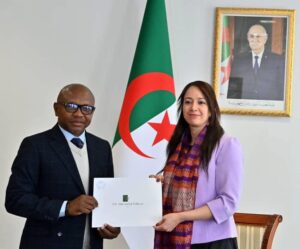
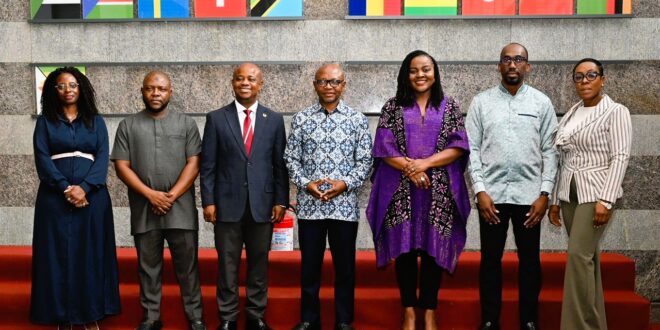
Ras Mubarak presents the campaign’s message to H.E. Selma Buktha Mansouri, Algeria’s Minister of State for African Affairs, in Algiers/Photo: Ras Mubarak
Challenges Encountered
The road journey was not without its obstacles. Campaigners encountered practical barriers in securing visas, faced administrative delays at some borders and navigated complex travel logistics across varied regulatory environments. Insecurity in Sudan, South Sudan and the West African Sahel proved a major obstacle. Mauritania denied the campaign team visa twice, forcing it to fly from Morocco to Senegal. These real-world challenges reinforced the campaign’s message about how visa policy affects mobility, tourism and economic collaboration across Africa.
Reception by African Media and Public Discourse
African media widely covered the campaign’s activities, often framing it within the broader context of continental integration. Headlines emphasised the historic scale of the journey and its alignment with shared African priorities:
-
Reporters highlighted the campaign’s grassroots interactions and diplomatic outreach as evidence of growing momentum behind the call for visa-free movement.
-
Commentators noted that the campaign resonates with young Africans’ aspirations for opportunity, mobility and economic participation, especially in the context of the African Continental Free Trade Area (AfCFTA).
-
Tourism analysts underscored that easier intra-continental travel could help revitalise a sector that historically lags behind global benchmarks, stressing that policies promoting free movement could help Africa tap into an estimated $3.3 trillion tourism market.
Critics, however, have also pointed to structural challenges that will require comprehensive policy action — including the harmonisation of passport standards, improved transport infrastructure and mechanisms to ensure that the benefits of freer movement are shared equitably across all regions.
Some sceptics further highlight the challenge of irregular migration, where people from poorer or insecure countries move to more stable and wealthier ones, often triggering local resentment. This dynamic may partly explain the relatively cool reception the campaign team encountered in South Africa, a country that has for decades grappled with irregular immigration from across the continent. The issue remains highly emotive in a society whose political leadership is otherwise strongly pan-African in outlook.
Additionally, concerns persist about insecurity linked to ongoing conflicts, including the war in Sudan, Islamist insurgencies in the Sahel region and continued violence in northern Nigeria.
Final Reception and Legacy
Upon returning to Accra on 22 January 2026, Ras Mubarak and his team were officially welcomed at Black Star Square, where the campaign leader thanked the Government of Ghana — particularly the Office of the Chief of Staff and Ministry of Foreign Affairs — for institutional support that opened doors across the continent. He reiterated the urgency of translating campaign visibility into concrete policy outcomes that can accelerate visa-free travel well ahead of the 2030 target.
The Trans-African Tourism and Unity Campaign thus concludes not as an end but as a mobilising milestone — a symbolic and practical push towards deeper continental unity and economic cooperation. Its impact will likely extend into ongoing debates within the African Union and among member states on how to balance sovereignty, security and integration in a rapidly changing world.
Femi Awoniyi