 THE AFRICAN COURIER. Reporting Africa and its Diaspora! The African Courier is an international magazine published in Germany to report on Africa and the Diaspora African experience. The first issue of the bimonthly magazine appeared on the newsstands on 15 February 1998. The African Courier is a communication forum for European-African political, economic and cultural exchanges, and a voice for Africa in Europe.

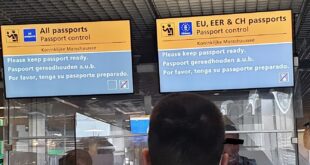
From 10 April, the EU’s Entry/Exit System becomes fully operational across 29 European countries. Every non-EU national — including visitors, tourists and those travelling to see family — will now have their biometric data registered at the border instead of receiving an ink stamp. Here’s what you should know about the new system
For decades, the ink stamp in a passport was the universal marker of arrival in Europe. A border officer would flip to a blank page, press down and that was that — a simple, analogue record of when and where you entered. From 10 April 2026, that system no longer exists for non-EU nationals. Across all 29 countries of the Schengen Area, it will be replaced by the EU’s Entry/Exit System (EES) — a centralised digital database that collects biometric data and tracks every border crossing in real time.
For the African community in Germany and across Europe — whether you are travelling home to visit family, welcoming relatives from the continent, or planning leisure travel within the Schengen zone — the EES is one of the most significant changes to European travel in a generation. Understanding how it works is no longer optional.
How the System Works
The EES registers every non-EU national crossing a Schengen external border — by air, land or sea. At the border checkpoint, a kiosk or officer workstation collects four fingerprints and a facial photograph, alongside your name, nationality, date of birth and travel document details. This data is stored centrally and accessed by border authorities across all participating countries.
For first-time registrations, the process adds roughly two to five minutes at the checkpoint. Subsequent crossings are faster: the system recognises returning travellers from stored biometrics, so later arrivals typically require only a quick fingerprint or facial scan for verification. Biometric data is retained in the system for three years from the date of registration, or longer in cases involving overstays or security concerns.
Who Is Affected — and Who Is Not
The system applies to all non-EU nationals making short stays of up to 90 days in any 180-day period, regardless of whether they need a visa or travel visa-free. This includes African nationals visiting Germany and other Schengen countries as tourists, for family visits or on business.
Critically, people who are exempt include: those holding a valid long-term German residence permit or EU permanent residence; holders of national long-stay visas (those issued for stays longer than 90 days); EU or German citizens, regardless of any other nationality they hold; and family members of EU citizens who hold a valid residence card. If you fall into any of these categories, you will not be registered under the EES.
The 90-Day Rule Is Now Automatically Enforced
This is the area of greatest practical consequence. Under the old system of manual passport stamps, calculating your remaining days in the Schengen Area was often done by the traveller themselves — or not at all. Faded, missing or unchecked stamps meant that overstays frequently went unnoticed.
The EES ends that era entirely. The system automatically calculates the number of days spent in the Schengen Area across all 29 countries over any rolling 180-day window, and updates in real time each time a border is crossed. Border officers can see your precise day count the moment you present your passport. When you approach your 90-day limit, the system flags it. When you exceed it, the overstay is recorded immediately and permanently.
The consequences are serious. An overstay is logged in the EES database for up to five years and is visible to border authorities and visa consulates across all participating countries. It can result in financial penalties — France, for example, imposes a fine of €198 for overstays — and in more serious cases, authorities may issue removal orders or temporary entry bans. Future visa applications will be directly affected, as consulates reviewing your record will be able to see the overstay in full. Exceptions exist for genuine emergencies such as serious illness, but the bar for such exceptions is high.
What to Expect at the Airport
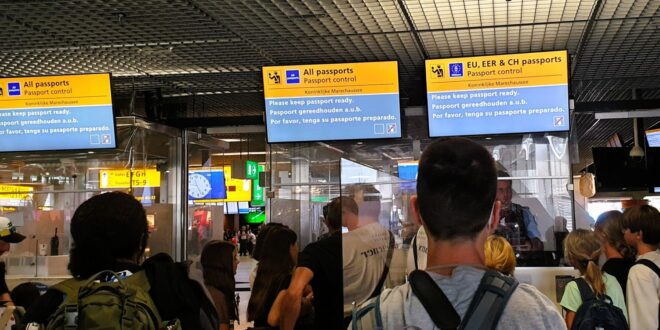
At major German airports such as Frankfurt, Munich and Berlin Brandenburg, EES-compliant kiosks and officer booths are already in place. On your first entry to the Schengen Area under the new system, you cannot use an automated e-gate — you must present yourself at a staffed booth or self-service kiosk for biometric enrolment. Allow extra time, particularly at busy periods. For a family of four travelling together, first-time registration could add around twenty minutes to the border crossing process.
Some airports experienced queuing difficulties and technical disruptions during the phased rollout that began in October 2025 and airport industry bodies have flagged continued capacity concerns for the peak summer travel season. EU member states retain the option to temporarily suspend full EES checks during exceptional high-traffic periods until September 2026, though the system itself remains in force. Travellers should check conditions at their specific point of entry before travelling and factor in additional processing time.
If you hold a non-biometric passport — one without an electronic chip, indicated by a small gold camera symbol on the cover — you will not be able to use self-service kiosks and will be directed to manual processing, which may take longer.
Looking Ahead: ETIAS Is Coming Too
The EES is the first of two interconnected systems reshaping how Europe manages non-EU travel. The second — the European Travel Information and Authorisation System, or ETIAS — is expected to launch in the final quarter of 2026, though no precise date has yet been confirmed.
ETIAS will require visa-exempt non-EU nationals to apply for and receive an online travel authorisation before they travel to Europe — similar in concept to the US ESTA. The application will be completed online, processed electronically within minutes in most cases, and linked digitally to the traveller’s passport. The fee has been set at €20 for adults aged 18 to 70; children under 18 and adults over 70 are exempt from the fee but still required to apply. An approved ETIAS will be valid for three years or until the passport expires, whichever comes first.
Vivian Asamoah