 THE AFRICAN COURIER. Reporting Africa and its Diaspora! The African Courier is an international magazine published in Germany to report on Africa and the Diaspora African experience. The first issue of the bimonthly magazine appeared on the newsstands on 15 February 1998. The African Courier is a communication forum for European-African political, economic and cultural exchanges, and a voice for Africa in Europe.

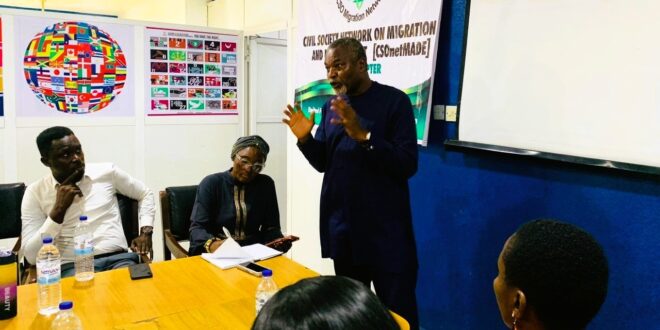
The Berlin-based German-African Initiative for Development and Integration (GAIDI) gUG is intensifying its strategic engagement against irregular migration by partnering with civil society organisations (CSOs) in Nigeria, one of the main countries of origin of irregular migrants to Europe.
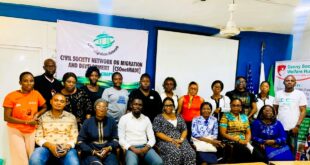
This commitment was underlined by Femi Awoniyi, Director of GAIDI, during his keynote address at the first 2026 meeting of the Civil Society Network on Migration and Development (CSOnetMADE) in Lagos.
Drawing on more than two decades of professional engagement in migration, refugee counselling and policy-oriented advocacy, Awoniyi emphasised that irregular migration is not only a humanitarian tragedy but also a development challenge that requires coordinated action between actors in Africa and Europe.

Awoniyi, a journalist who is also the publisher of The African Courier, highlighted the devastating human toll of unplanned and undocumented migration routes. Since 2014, an estimated 30,000 people have died or gone missing attempting irregular crossings of the Mediterranean, while thousands more are believed to have perished in the Sahara Desert, he pointed out. Beyond fatalities, hundreds of thousands of Africans are stranded in transit in North Africa, the Middle East and across Europe, often in prolonged legal uncertainty, with severe physical and psychological consequences, he added.
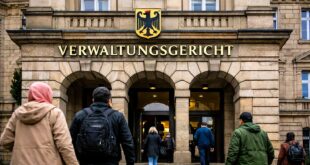
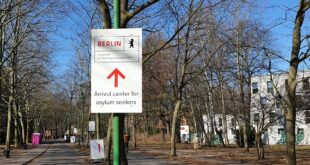
Referring to the German context, Awoniyi noted that more than 12,000 Nigerians have been issued deportation orders in recent years following the rejection of their asylum applications. “When those still in the asylum process, many of whom have very low prospects of success, are taken into account, the figures rise significantly, given the low recognition rate for Nigerian asylum-seekers, which currently stands at about 6.5 per cent,” he said. “This underlines the urgent need for prevention through the dissemination of accurate information and the promotion of realistic alternatives, long before people embark on dangerous journeys.”
GAIDI’s work goes beyond integration in Germany. As a Germany-based organisation with deep roots in African communities, GAIDI operates along the full migration cycle:
- Prevention and awareness-raising in countries of origin
- Information on legal migration pathways
- Support for migrants and refugees in Germany
- Policy-relevant dialogue with African and European stakeholders
In cooperation with Nigerian CSOs, GAIDI is currently developing enhanced safe-migration awareness campaigns that combine factual information, lived experience from Europe and locally grounded messaging. Awoniyi stressed that closer partnerships between Africa-based organisations and Europe-based African diaspora organisations are essential for credibility, effectiveness and sustainability.
“Diaspora organisations like GAIDI can translate European migration realities into practical, locally understandable messages,” he said. “At the same time, we learn from local actors how best to reach young people and communities at risk.”
Promoting Legal Pathways and Local Opportunities
Awoniyi reiterated that Germany offers legal pathways for migration, including for education, vocational training and employment. However, these opportunities require accurate information and preparation. He warned strongly against human traffickers who exploit the desperation of their victims.
He called on Nigerian CSOs to systematically integrate information on legal migration routes as well as realistic livelihood opportunities within Nigeria into their programmes. “I have met many Nigerians who left stable jobs and families to seek greener pasture in Europe only to discover that they had made a terrible decision,” he said. “Emigration is not automatically a better option.”
Addressing Root Causes Through Skills and Employment
Awoniyi commended Nigerian CSOs for their work despite limited funding and urged them to strengthen skills acquisition and self-reliance components in their programmes. He pointed to the paradox that Nigeria imports skilled artisans such as tilers and POP makers from neighbouring countries while facing massive youth unemployment.
“This contradiction shows that the problem is not a lack of opportunities, but a lack of access to skills and structured support,” he said. “Addressing this is a key element of preventing irregular migration.”
Strategic Engagement and Institutional Partnerships
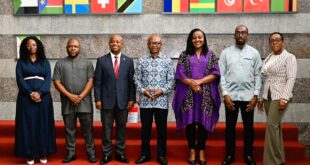
During his brief visit to Lagos, Awoniyi held strategy and working consultations with several organisations on closer collaboration and partnering on new projects.
Through these partnerships, GAIDI positions itself as a bridge organisation: combining on-the-ground insights from Africa with experience in Germany, and contributing concretely to the prevention of irregular migration while supporting orderly, legal and development-oriented mobility.
Kola Tella